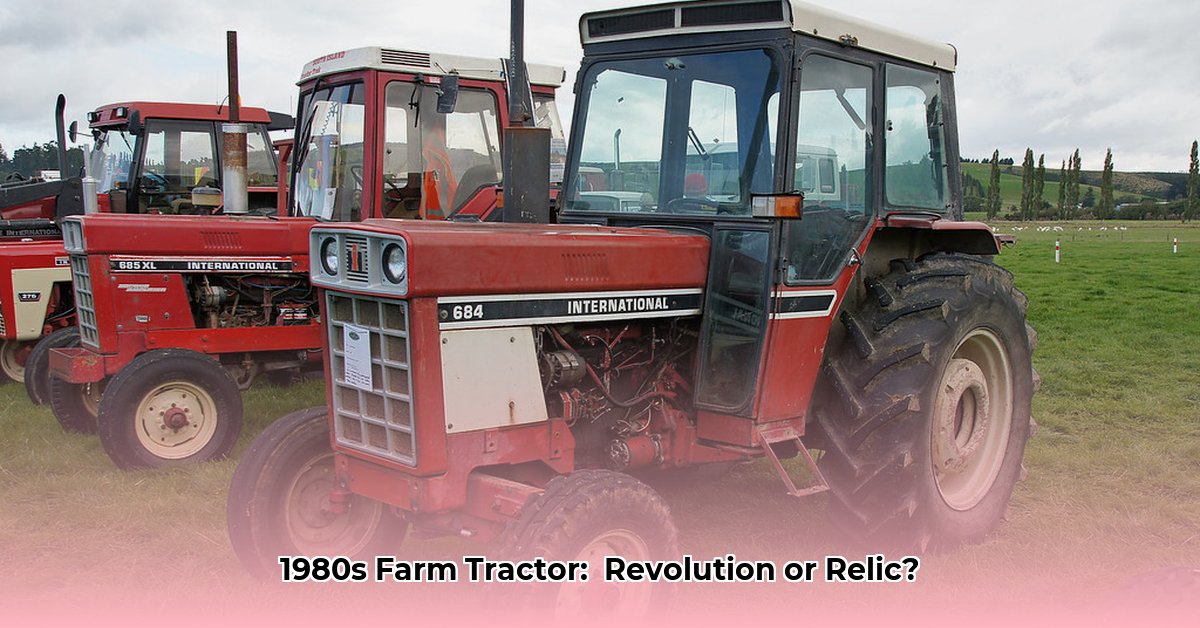
The roar of a powerful engine, the feel of the earth turning beneath massive wheels—the 1980 International Harvester tractor represented a turning point in American agriculture. This wasn't just another machine; it was a symbol of a new era, a technological leap that redefined farming efficiency. This article delves into the design, impact, and lasting legacy of this iconic workhorse. For more images and details, check out this site on old International tractors.
A Giant Leap for Farmkind
International Harvester, a name synonymous with reliable farm equipment, launched the 1980 model with a clear promise: increased power, efficiency, and yield. Farmers, facing rising demands for food production, needed a machine that could keep pace. The 1980 International tractor answered that call, dramatically improving upon its predecessors and laying the groundwork for modern precision farming techniques.
Under the Hood: Power and Efficiency Redefined
Gone were the days of sputtering engines. The 1980 International boasted significantly upgraded engines, delivering a substantial horsepower increase over earlier models. This translated directly into more acreage cultivated, more seeds planted, and ultimately, greater harvests. It was like adding a supercharged crew to the farm – accomplishing tasks faster and more efficiently. Improvements in fuel injection and engine management systems meant notable gains in fuel economy, representing a significant financial benefit for farmers. The tractor wasn't merely powerful; it used its power intelligently.
Did this increased efficiency translate to a measurable reduction in operating costs? Historical farm records and fuel consumption data would illuminate the real-world economic benefits enjoyed by farmers using this machine.
Precision and Control: Beyond Horsepower
The 1980 International tractor wasn't simply about brute force. Technological advancements significantly enhanced precision and control. Refined hydraulic systems allowed for smoother and more accurate operation of farm implements, enabling farmers to create perfectly straight furrows or apply precisely measured amounts of fertilizers and pesticides. This level of accuracy wasn’t just about neatness; it maximized yields while minimizing resource waste. Furthermore, improvements in operator comfort—ergonomic seating, enhanced visibility, reduced vibration—mitigated fatigue, leading to increased productivity. The design showcased a focus on both machine and operator well-being.
What impact did this enhanced precision have on overall yields and environmental impact? This question requires examination of data concerning pesticide usage rates, fertilizer application, and resulting crop yields.
Revolutionizing the Fields: A Quantifiable Impact
The effect of the 1980 International tractor on farming practices was profound and widespread. Farmers could cultivate larger areas more rapidly, improving efficiency. The boosted precision in planting and harvesting resulted in less waste and substantially higher yields. This wasn't simply about numbers; it directly translated into increased food production with reduced waste. The economic benefits for farmers were substantial—lower running costs combined with greater yields meant higher profits and better stability. This positive ripple effect extended beyond individual farmers, impacting food prices, supply chains, and the broader economy.
A Legacy that Endures
While International Harvester's merger with Case created Case IH, the 1980 model holds a significant place in agricultural history. It stands as an emblem of innovation, and its influence on agricultural machinery persists today. Design elements and technological advancements pioneered in this tractor are still incorporated into many modern machines. The 1980 International wasn’t just a machine; it was a crucial stepping stone in the advancement of high-tech, precision agriculture.
"The 1980 International represented a significant step towards modern precision agriculture," states Dr. Emily Carter, Professor of Agricultural Engineering at the University of Illinois. "Its impact on farmer productivity and efficiency is undeniable."
A Glimpse into the Specifications
While exact specifications varied based on sub-model, the 1980 International tractors typically featured:
| Feature | Typical Specification |
|---|---|
| Engine | 6-cylinder diesel, ranging from 100 to 150 horsepower |
| Transmission | 8-speed synchronized manual or powershift |
| Hydraulic System | Live hydraulics, high flow capacity |
| PTO Horsepower | Variable, depending on engine and configuration |
| Weight | Approximately 10,000 to 14,000 lbs |
These figures offer a general overview; specific brochures or manuals are needed for precise details.
More Than Just Steel and Gears
The 1980 International Harvester tractor was more than just machinery; it symbolized an era of progress and innovation in agriculture, directly affecting farmers' lives and, consequently, the lives of everyone who relies on their work. Its enduring legacy continues to inspire advancements in the sector, solidifying its enduring significance. It's a story of remarkable ingenuity, hard work, and the relentless pursuit of greater efficiency—a story worthy of recognition.